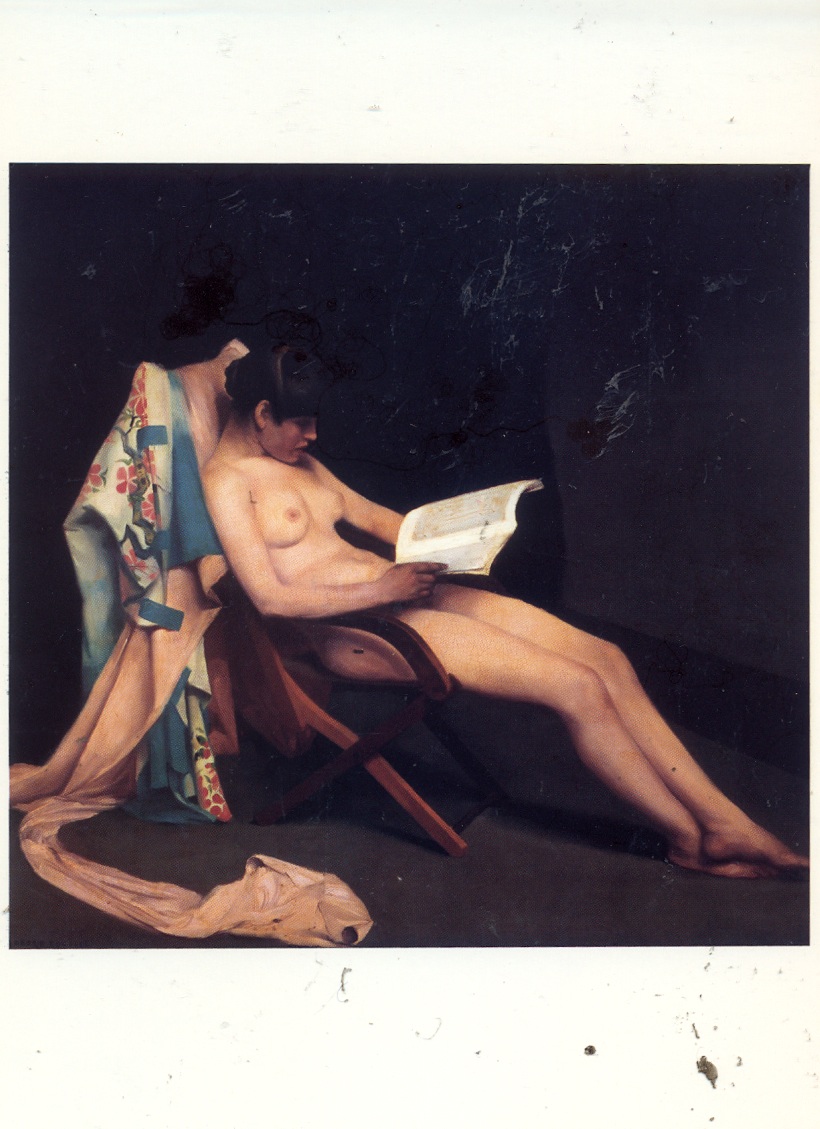
Representações visuais da mulher leitora: notas sobre as transmutações de uma prática cultural
DOI:
https://doi.org/10.19132/1807-8583201534.421-455Palabras clave:
Leitura. História da leitura. Leitura feminina. Representação visual. Imaginário. Objetos impressos. Prática cultural.Resumen
O trabalho apresenta resultados parciais de uma investigação que busca apreender o lugar simbólico-respresentacional ocupado/destinado às mulheres no âmbito da história da leitura. Para tanto, adota como universo empírico figurações e experiências visuais concebidas por artistas plásticos e fotógrafos no contexto geral da história da arte. Tendo por objeto empírico um vastíssimo conjunto de obras pictóricas e fotográficas, o estudo analisa três momentos específicos nos quais os gestos de leitura empreendidos pelas mulheres e o seu contato com os objetos impressos configuravam-se segundo quadros de sentido amplamente enraizados na esfera cultural, a saber: a mãe zelosa que transmite a seus filhos, por meio da leitura, os preceitos e normas que amparavam a vida religiosa e comunal na Idade Média; as moças sonhadoras do período romântico que fizeram da leitura, tanto pública quanto privada, um recurso de auto-formação individual e emancipador; e, por fim, a leitura como uma prática corriqueira e incorporada ao dia-a-dia das mulheres “modernas”, estejam elas em casa ou no espaço coletivo, em momentos de lazer ou em atividades laborais. Ao fim desse percurso, ressalta-se que a leitura é uma prática cultural de apreensão e simbolização do mundo cujos gestos, fazeres e representações assentam-se, em larga medida, nas distintas matrizes de significação que conformam e informam a vida social.Descargas
Citas
ABADIA de Fontevraud. Escultura fúnebre para a tumba de Leonor de Aquitania. França. Disponível em: <http://vidasfamosas.com/2010/05/21/leonor-de-aquitania-corazon-de-leona/>. Acesso em: 19 out. 2015.
ALBERT, Micah. At the Dandora dump. 2013. 1 fotografia, color. Foto apresentada na mostra World Press Photo 2013, organizada pela Caixa Cultural Brasília. Disponível em: <http://www.micahalbert.com/buried-in-dandora/k6i98xdwvb0dc33igxi7r891cdzpew>. Acesso em: 19 out. 2015.
ALLORI, Alessandro. Madalena Penitente. 1602. 1 original de arte. Disponível em: <http://www.atlantedellarteitaliana.it/index.php?artwork=1420&lang=english>. Acesso em: 19 out. 2015.
BEHMER, Hermann Fenner. Leito ávido. [1906]. Disponível em: <http://4.bp.blogspot.com/-CHomiEKiYZQ/UUoIzermEmI/AAAAAAAAil8/DJSVa3AC1T0/s1600/Fenner-Behmer,+Hermann+(1866%E2%80%931913)+Der+B%C3%BCcherworm,+ca.+1910.jpg>. Acesso em: 19 out. 2015.
BENNER, Emmanuel. Maria Madalena no deserto. 1886. 1 original de arte. Disponível em: http://almacattleya.blogspot.com.br/2011/09/perche-si-legge.html. Acessado em: 19/10/2015.
BERNÁRDEZ, Asunción. Pintando la lectura: mujeres, libros y representación en el siglo de oro. Edad de oro, v. 26, p. 67-89, 2007. Disponível em: <http://eprints.ucm.es/10411/1/Pintando_la_lectura_Edad_de_Oro.pdf>. Acesso em: 19 out. 2015.
BLONCOURT, Gérald. Ônibus biblioteca na cidade de Levallois Perret, França. [1960]. Fotografia, preto e branco. Disponível em: <http://books0977.tumblr.com/image/115819490262>. Acesso em: 19 out. 2015.
BOLLMANN, Stefan. Mulheres que lêem são perigosas. Lisboa: Quetzal Editores, 2007.
BOTERO, Fernando. Mulher lendo. [2002]. Disponível em: <http://arvoreestante.blogspot.com.br/search/label/BOTERO%20%28Fernando%29>. Acessado em: 19/10/2015.
BROWN, Delia. Lendo na sala vermelha 2. [2006]. Disponível em: <http://www.deliabrown.net/Delia_Brown/Images/Pages/Forsaken_Lover.html#1>. Acessado em: 19 out. 2015.
BURKE, Peter. Pintores como historiadores na Europa do século 19. In: MARTINS, José de Souza; ECKERT, Cornelia; NOVAES, Sylvia Caiuby (Org.). O imaginário e o poético nas ciências sociais. Bauru: Edusc, 2005, p.15-32.
CASA NOVA, Vera. Tal imagem, qual texto? Ou tal texto, qual imagem?. In: MARTINS, Aracy Alves et al. Livros e telas. Belo Horizonte: UFMG, 2011, p.144-148.
CAVALLO, Guglielmo; CHARTIER, Roger (Orgs.). História da leitura no mundo ocidental. São Paulo: Ática, 2002, 2 v. (Múltiplas escritas, v. 2).
CERTEAU, Michel de. A invenção do cotidiano: artes de fazer. Petrópolis: Vozes, 1994.
CHARTIER, Anne-Marie; HÉBRARD, Jean. A invenção do cotidiano: uma leitura, usos. Projeto História, São Paulo, v. 17, p. 29-44, nov. 1998.
CHARTIER, Roger. Mulheres de papel: prefácio. In: LACERDA, Lilian de. Álbum de leitura: memórias de vida, histórias de leitoras. São Paulo: Unesp, 2003, p. 17-24.
CHARTIER, Roger. Os desafios da escrita. São Paulo: UNESP, 2002.
CLEVE, Joos van. Anunciação. 1525. 1 original de arte. Disponível em: <http://pt.wahooart.com/@@/8Y375J-Joos-Van-Cleve-o-anuncia%C3%A7%C3%A3o>. Acesso em: 19 out. 2015.
COMPAGNON, Antoine. Literatura para quê? Belo Horizonte: UFMG, 2009.
DALARUN, Jacques. O olhar de clérigos. In: DUBY, Georges; PERROT, Michelle. História das mulheres no Ocidente: a Idade Média. Porto: Edições Afrontamento, 1990. p.29-63.
DIRCEY. Frank. The Novel: a lady in a garden reading a book. [1880-1888]. Disponível em: <https://anemalon.files.wordpress.com/2012/08/r2bfrank2bdicey2b25281838-188825292bthe2bnovel252c2ba2blady2bin2ba2bgarden2breading2ba2bbook-2b252822529.jpg>. Acesso em: 19 out. 2015.
ESTACHON, Louis Antoine. Leitura no parque. [1850]. Disponível em: <https://upload.wikimedia.org/wikipedia/commons/6/6a/Louis_Antoine_Estachon_Lesende_in_Parklandschaft_1858.jpg>. Acesso em: 19 out. 2015.
EYCK, Jan van. Maria com o menino que lê. 1433. Disponível em: <http://pt.wahooart.com/@@/8XYBH2-Jan-Van-Eyck-o-%60ince%60-sal%C3%A3o-madonna-(a-virgem-e-crian%C3%A7a-leitura>. Acesso em: 19 out. 2015.
FABRIANO, Antonio da. São Jerônimo no scriptorium. 1451. 1 original de arte. Disponível em: <http://lh3.ggpht.com/-2T80a1Ol2KE/UV1f4jLz6rI/AAAAAAAAF7k/M6grqP_3CCI/s1600-h/clip_image002%25255B4%25255D.jpg>. Acesso em: 19 out. 2015.
FRUGONI, Chiara. A mulher nas imagens, a mulher imaginada. In: DUBY, Georges; PERROT, Michelle. História das mulheres no Ocidente: a Idade Média. Porto: Edições Afrontamento, 1990, p.461-511.
GOULEMOT, Jean-Marie. Esses livros que se lêem com uma só mão: leitura e leitores de livros pornográficos no século XVIII. São Paulo: Discurso Editorial, 2000. (Clássicos e comentadores).
HASENCLEVER, Peter. A sentimental. [1847]. Disponível em: <https://rceliamendonca.files.wordpress.com/2012/06/johann-peter-hasenclever-1810-1853-the-sentimental.jpg>. Acesso em: 19 out. 2015.
HOPPER, Edward. Lobby de hotel. [1943]. Disponível em: <http://www.todocuadros.com/tienda/reproducciones-oleo/hopper/lobby-hotel>. Acessado em: 19 out. 2015.
ISER, Wolfgang. O ato da leitura. Uma teoria do efeito estético. São Paulo: Editora 34, 1996, 2 v.
JAUSS, Hans Robert. Pour une esthetique de la recepcion. Paris: Gallimard, 1990.
LYONS, Martyn. Os novos leitores no século XIX: mulheres, crianças, operários. In: CAVALLO, Guglielmo; CHARTIER, Roger (Orgs.). História da leitura no mundo ocidental. São Paulo: Ática, 2002, v. 2, p. 165-202.
MANGUEL, Alberto. O espectador comum: a imagem como narrativa. In: Lendo imagem: uma história de amor e ódio. São Paulo: Companhia das Letras, 201, p.15-33.
MENESES, Ulpiano Bezerra de. Rumo a uma "história visual". In: MARTINS, José de Souza; ECKERT, Cornelia; NOVAES, Sylvia Caiuby (Org.). O imaginário e o poético nas ciências sociais. Bauru: Edusc, 2005, p.33-56.
METZKES, Harald. Mulheres cultas. [2001]. Disponível em: <http://matematica-old.unibocconi.it/donne2008/donneleggono01.jpg>. Acesso em: 19 out. 2015.
NIEMEYER, John Henry. Sonhadora. [1881]. Disponível em: <http://www.artnet.com/artists/john-henry-niemeyer/wistful-Qz68Og-zUQfNnJSrvpf5sQ2. Acesso em: 19 out. 2015.
PEPONNIER, Françoise. O universo feminino: espaços e objetos. In: DUBY, Georges; PERROT, Michelle. História das mulheres no Ocidente: a Idade Média. Porto: Edições Afrontamento, 1990, p.441-459.
PERROT, Michelle. Escrever uma história das mulheres: relato de uma experiência. Cadernos pagu, v.4, p.9-28, 1995. (Dossiê: História das mulheres no Ocidente)..
PETIT, Michèle. A arte de ler: ou como resistir à adversidade. São Paulo: Editora 34, 2009.
PIGLIA, Ricardo. O último leitor. São Paulo: Companhia das Letras, 2006.
RICOEUR, Paul. Mundo do texto e mundo do leitor. In: Tempo e narrativa. Campinas: Papirus, 1997, p.273-314, v.3.
RIZA, Mo. Na plataforma lendo. [2006]. Fotografia, color. Disponível em: <http://p3.publico.pt/sites/default/files/livro_flickr.jpg>. Acesso em: 19 out. 2015.
ROUSSEL, Theodore. Moça que lê. [1887]. Disponível em: <https://elianaatihe.files.wordpress.com/2013/01/leitora-nua.jpg>. Acesso em: 19 out. 2015.
SOLMSSEN, Kurt. Leitura de verão. [2003]. Disponível em: <http://kurtsolmssen.net/images/2003sum.jpg>. Acessado em: 22 out. 2015.
TIEPOLO, Giambattista. Educação da virgem. 1732. Disponível em: <http://www.niceartgallery.com/pt/Giovanni-Battista-Tiepolo/The-Education-of-the-Virgin-Mary-1732.html>. Acesso em: 19 out. 2015.
WATT, Ian. A ascensão do romance: estudos sobre Defoe, Richardson e Fielding. São Paulo: Companhia das Letras, 1990.
WEYDEN, Rogier van der. Tríptico da Anunciação. [1434-1440]. 1 original de arte. Disponível em: <http://virusdaarte.net/wp-content/uploads/2014/11/pres%C3%A9p1.png>. Acesso em: 19 out. 2015. 19/10/2015.
WILKIE, David. Reading the Will. [1820]. Disponível em: <http://www.wikiart.org/en/david-wilkie/reading-the-will-1821>. Acesso em: 19 out. 2015.
WOOLF, Virginia. Um teto todo seu. Rio de Janeiro: Nova Fronteira, 1985.

Descargas
Publicado
Cómo citar
Número
Sección
Licencia
Derechos de autor 2015 Fabrício José Nascimento da Silveira, Paulo Bernardo Ferreira Vaz

Esta obra está bajo una licencia internacional Creative Commons Atribución-NoComercial 4.0.
Los derechos de autor de los artículos publicados en esta Revista pertenecen a los autores, y los derechos de la primera publicación están garantizados para la revista. Por estar publicados en una revista de acceso libre, los artículos son de uso gratuito, con la atribución apropiada, en las actividades educativas y no comerciales.
La revista utiliza la Licencia Creative Commons Attribution (CC BY-NC 4.0), que permite el intercambio de trabajo con el reconocimiento de la autoría.
Autoarchivo (política de repositorios): se permite a los autores depositar todas las versiones de sus trabajos en repositorios institucionales o temáticos, sin período de embargo. Se solicita, siempre que sea posible, que se agregue la referencia bibliográfica completa de la versión publicada en Intexto (incluido el enlace DOI) al texto archivado.
Intexto no cobra ninguna tarifa por el procesamiento de artículos (article processing charge).







+Der+B%C3%BCcherworm,+ca.+1910.jpg)