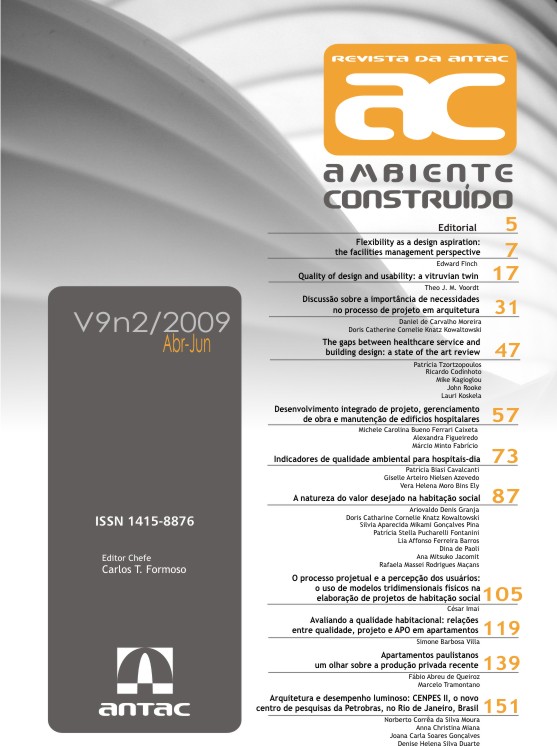
O processo projetual e a percepção dos usuários: o uso de modelos tridimensionais físicos na elaboração de projetos de habitação social
Palavras-chave:
Relação ambiente-comportamento. Avaliação pós-ocupação. Avaliação pré-projeto. Projeto de arquitetura. Modelos tridimensionais. Psicologia ambiental.Resumo
O presente artigo examina as relações existentes entre o projetista e o futuro morador residencial dentro de um processo projetual que tem como proposta facilitar a comunicação por meio de sistemas de representação que utilizam modelos físicos tridimensionais flexíveis (maquetes). Busca-se uma melhor compreensão sobre a percepção espacial do usuário leigo e investigar como a representação pode contribuir ou dificultar um processo projetual participativo. O método de pesquisa utilizado baseia-se em análises comportamentais registradas durante o processo projetual, por meio de gravações em vídeo, pelo estudo dos esboços dos projetos desenhados previamente pelos futuros moradores (com seus aspectos de compreensão espacial), da presença (ou ausência) de domínio técnico nessa representação e, finalmente, pela comparação entre esses esboços e os projetos finais. Os resultados alcançados indicam uma busca da idealização do espaço da moradia, fruto dos modelos pré-concebidos por esses usuários, que foram baseados no seu conhecimento prévio e nas suas experiências de vida em relação à habitação. Esses exemplos indicam mais uma busca em prol do alcance de um sonho concretizado pela edificação, indicando muitas vezes ser uma conseqüência de um modelo de consumo divulgado pelos meios de comunicação ou uma busca de ascensão social representada pelas características da habitação.
Downloads
Downloads
Publicado
Como Citar
Edição
Seção
Licença
Direitos Autorais
Autores de artigos publicados pela Ambiente Construído mantêm os direitos autorais de seus trabalhos, licenciando-os sob a licença Creative Commons Attribution BY 4.0, que permite que os artigos sejam reutilizados e distribuídos sem restrição, desde que o trabalho original seja corretamente citado.