Cronistas que visibilizan saberes ancestrales
DOI:
https://doi.org/10.19132/1808-5245260.317-337Palabras clave:
Patrimonio Inmaterial. Estrategias. Carpintería de Ribera. Tierra Bomba. Cronistas.Resumen
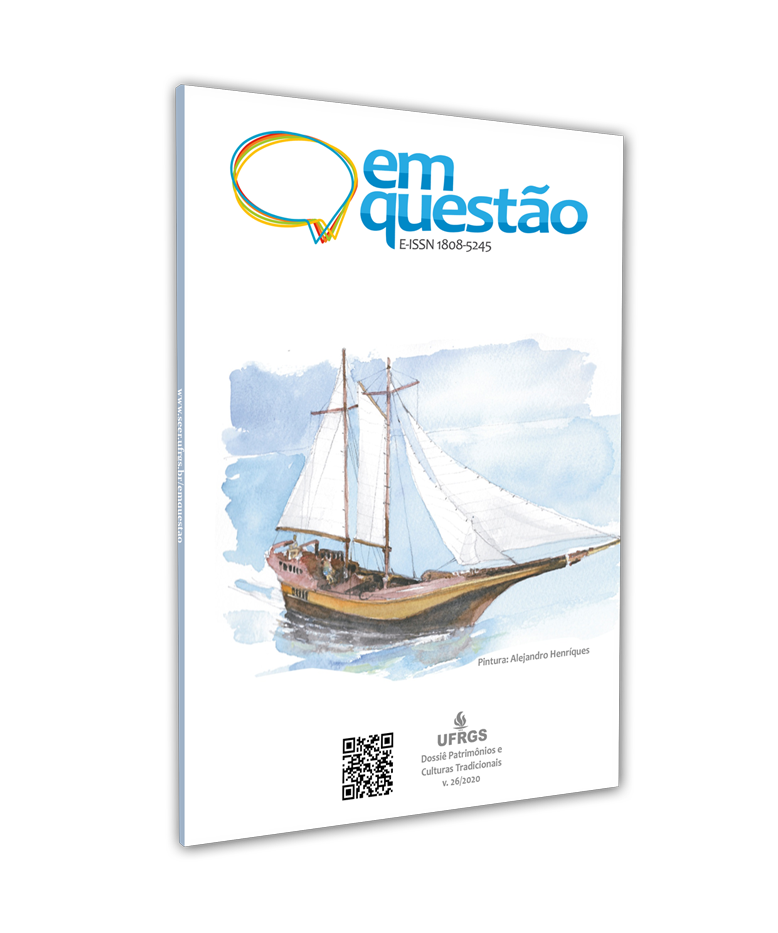
Resumen: Un tema central en las políticas de conservación de Patrimonio Inmaterial o Intangible es la recuperación de oficios y saberes tradicionales, entendidos como ejemplos de manifestaciones expresiones, conocimientos y prácticas que dan a la comunidad y a un grupo humano un sentido de identidad, pertenencia y continuidad histórica. De manera similar, el Ministerio de Cultura de Colombia y su Dirección de Patrimonio ha liderado una iniciativa que cuestiona la invisibilización política, económica y cultural de la población afrocolombiana e intenta reivindicar la memoria de resistencia y construcción del territorio, expresados en oficios como la construcción de embarcaciones de madera. El artículo que se presenta a continuación es el resumen de una exploración por el oficio de la “Carpintería de Ribera” en la isla de Tierra Bomba en la costa caribe de Colombia, narrada a través de las voces de maestros y aprendices que conservan las técnicas y los conocimientos para construir dichas embarcaciones, y que hacen parte de un proyecto que incluye equipos interdisciplinarios, cursos de aprendizaje y talleres prácticos. Para entrevistar a los protagonistas se apela al uso de cuadernos de viaje que, como los usados por los cronistas de antaño, se convierten en herramientas para recoger, reconocer y transmitir las vivencias de sus actores de forma eficaz e íntima. Con sus relatos y sus dibujos recuperan, ellos mismos, una tradición ancestral que logra ser hoy también una adecuada manera de trabajar en la búsqueda de estrategias para recuperar oficios y saberes tradicionales en el ámbito del Patrimonio Cultural.
Descargas
Citas
BERGER, John. La apariencia de las cosas. Ensayos y artículos escogidos. Barcelona: Editorial Gustavo Gili, 2014.
COLOMBIA. Ministerio de Cultura. Diáspora africana en Colombia. 2020.
CHOCANO HIGUERAS, Guadalupe. Naves del Descubrimiento. La “Santa María”, la “Pinta” y la “Niña”. Madrid: Museo Naval, 1991.
DEL CAIRO, Carlos.; GARCÍA, Catalina. A la pesca de langostas y galeones: apropiación y valoración de los recursos culturales y naturales marítimos en comunidades pescadoras de la Isla de Tierra Bomba. Zainak. Cuadernos de Antropología-Etnografía, España, n. 33, p. 83-115, 2010.
HENRÍQUEZ, Alejandro. Carpintería de ribera en la Bahía de Cartagena, Isla de Tierra bomba. Bogotá: Ministerio de Cultura Dirección de Patrimonio, 2020.
HIGUERA, Sandra. El ecosistema cultural de litoral en Bocachica (isla de Tierra Bomba–Cartagena): lineamientos básicos para la formulación de un Plan Especial de Salvaguardia, (Tesis de Maestría), Universidad Javeriana, Bogotá, 2013.
LAMAZOU, Titouan. Femmes du Monde. Belgica: Gallimard Loisirs, 2007.
LÓPEZ MARTÍNEZ, Joaquín; MORENO SORLI, Felix; MEJÍAS TAVER, Juan Carlos. Libreta de notas de un Carpintero de Ribera. Un oficio y una vida en el Cabanyal. España: ADD Editorial, 2014. v. I y II.
SEGOVIA SALAS, Rodolfo. Las fortificaciones de Cartagena de Indias. Estrategia e Historia. Bogotá: Carlos Valencia Editores, 1982.
UNESCO. Lista de Patrimonio Mundial. Cartagena de Indias. Declaratoria c-285, 1984.
VIVES AZANCOT, Pedro. Tres siglos de fortificación e infraestructura portuaria en la América Española. En: Puertos y Fortificaciones en América y Filipinas. Madrid: CEHOPU, 1985.
Descargas
Publicado
Cómo citar
Número
Sección
Licencia
Derechos de autor 2020 Alejandro Henriquez, Jaime Alberto Sarmiento Ocampo

Esta obra está bajo una licencia internacional Creative Commons Atribución 4.0.
Autores que publican en esta revista están de acuerdo con los siguientes términos:
Los autores mantienen los derechos autorales y ceden a la Revista el derecho de la primera publicación, con el trabajo licenciado bajo la Licencia Creative Commons Attribution (CC BY 4.0), que admite compartir el trabajo con reconocimiento de la autoria.
Los autores tienen autorización para asumir contratos adicionales en forma separada, para la distribución no exclusiva de la versión del trabajo publicada en esta Revista, como para publicar en repositorio institucional, con reconocimiento de autoria y publicación inicial en esta Revista.
Los artículos son de acceso abierto y gratuitos. Según la licencia, usted debe dar crédito de manera adecuada, brindar un enlace a la licencia, e indicar si se han realizado cambios. No puede aplicar términos legales ni medidas tecnológicas que restrinjan legalmente a otras a hacer cualquier uso permitido por la licencia.