
TRANSGREDINDO A NORMA PARA SE COMUNICAR:O CASO DOS RADICAIS GRECO-LATINOS NA FORMAÇÃO DOS NEOLOGISMOS DO PORTUGUÊS CONTEMPORÂNEO
DOI:
https://doi.org/10.22456/2238-8915.30439Resumo
The article deals with the coinage of new words in contemporary Portuguese using the secondarymeaning of Greek and Latin afixes such as “tele-”, “audio-” , “foto-” and “radio-”. The new semic combination ofthose radicals, formed through the sociolinguistic dimension of language, proves, once more, that creation ofneologisms belongs to the syncrony of language.Downloads
Não há dados estatísticos.
Downloads
Publicado
2012-07-04
Como Citar
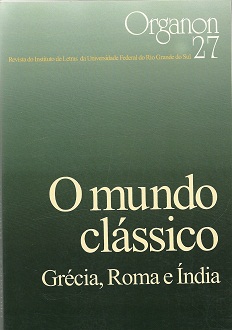
PILLA, Éda Heloisa. TRANSGREDINDO A NORMA PARA SE COMUNICAR:O CASO DOS RADICAIS GRECO-LATINOS NA FORMAÇÃO DOS NEOLOGISMOS DO PORTUGUÊS CONTEMPORÂNEO. Organon, Porto Alegre, v. 13, n. 27, 2012. DOI: 10.22456/2238-8915.30439. Disponível em: https://seer.ufrgs.br/index.php/organon/article/view/30439. Acesso em: 24 set. 2026.
Edição
Seção
Artigos

