
I won’t leave here again, not even dead!
Keywords:
Visual Ethnography, Memory, Duration, Family Lineage, Urban-RuralAbstract
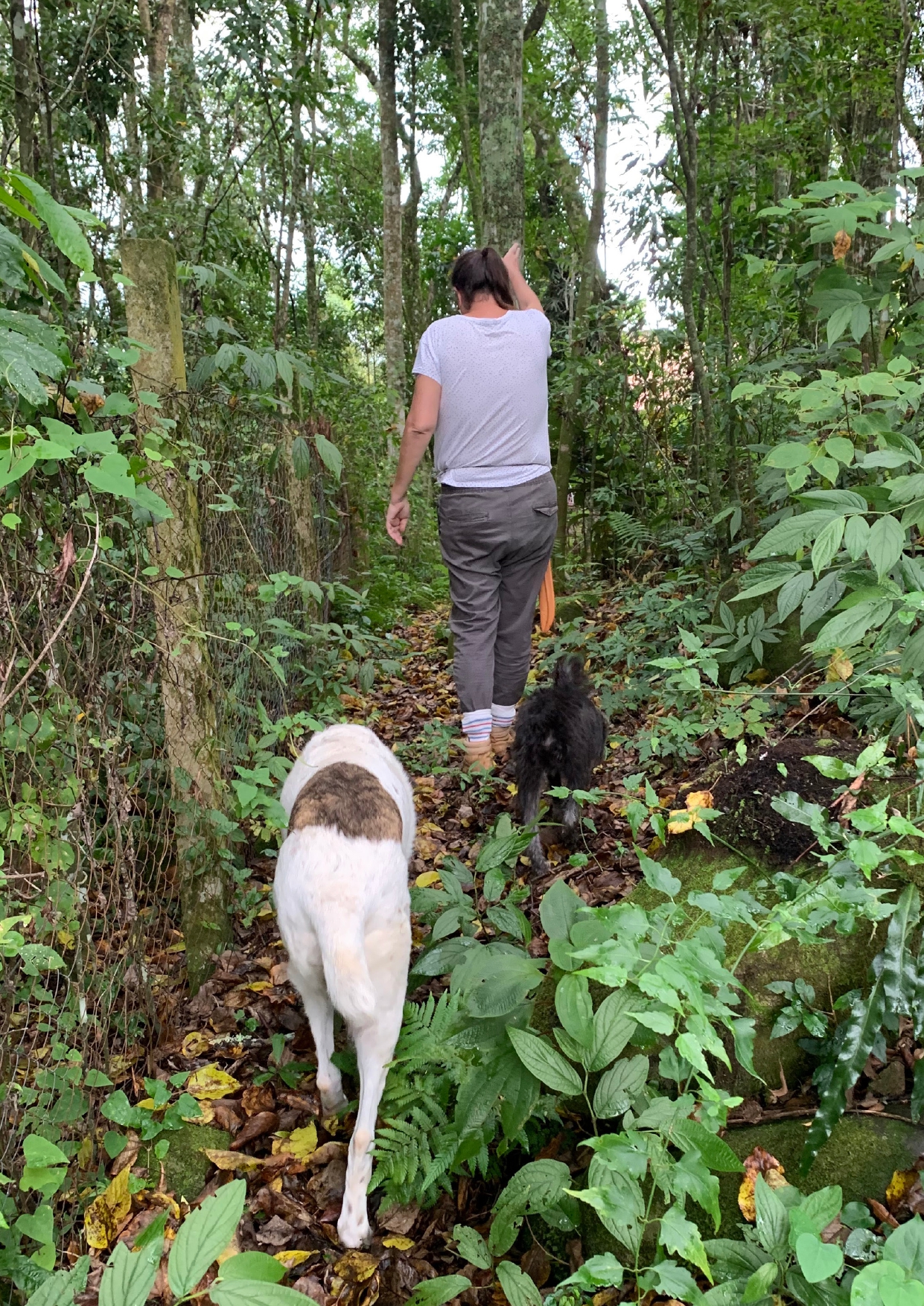
This “visual ethnography” is the result of field research carried out in April 2023 for my doctoral thesis, which is still in progress, I present the “memory of the earth” and the “understanding of time” constructed by living heritage and reference by Nonô Joris. A white, city-dwelling woman, 52-year-old journalist, who has lived her entire life in the city of Porto Alegre and who in May 2021, during the Covid-19 pandemic, decided to live in the interior of Nova Petrópolis, with her three dogs and two cats, restoring her values in a new lifestyle that understands herself and her family lineage. Nonô transmits and represents, through the gestures and practices of his daily life, recalled by the device of photographs and opening the way with a machete, his intertwining between past and present, the moment in which he is living, fully in connection with his original rural memory.
Downloads
References
Pink, Sarah. “Introduction”. Doing Visual Ethnography. London: Sege, 2007, p.1–18.
PEIRANO, M. A teoria vivida: e outros ensaios de antropologia. Rio de Janeiro: Jorge Zahar Ed., 2006.
ROCHA, L e ECKERT, C; Etnografia da duração; Porto Alegre, Marcavisual editores, 2013.
VELHO, G. Projeto e metamorfose: antropologia das sociedades complexas. Rio de Janeiro: Zahar, 1994.
Downloads
Published
How to Cite
Issue
Section
License
Copyright (c) 2024 Maria Carmencita Job

This work is licensed under a Creative Commons Attribution-NonCommercial 4.0 International License.
- Todo o conteúdo do periódico, exceto onde está identificado, está licenciado sob uma Licença Creative Commons do tipo atribuição BY-NC.
- O envio dos trabalhos implica a cessão imediata e sem ônus dos direitos de publicação para a revista, a qual é filiada ao sistema Creative Commons, atribuição CC BY-NC (https://creativecommons.org/licenses/by-nc/4.0/). O autor é integralmente responsável pelo conteúdo do artigo e continua a deter todos os direitos autorais para publicações posteriores do mesmo, devendo, se possível, fazer constar a referência à primeira publicação na revista. Esta não se compromete a devolver as contribuições recebidas.
- O(s) autor(es) que submete (m) artigos para publicação na Revista Fotocronografias são legalmente responsáveis pela garantia de que o trabalho não constitui infração de direitos autorais, isentando a Revista Fotocronografias quanto a qualquer falha quanto a essa garantia.
